
68% of proposal teams now utilize agentic AI to execute complex workflows, representing a twofold increase since 2023. This rapid adoption highlights a critical reality: traditional, manual RFP methods are no longer viable for maintaining a competitive edge. You likely recognize the operational friction caused by manual bottlenecks and the persistent lack of market price transparency during vendor selection. These inefficiencies don't just delay projects; they compromise your clinical financial precision. Understanding how to manage the RFP process from start to finish is now a strategic necessity for any organization focused on aggressive cost optimization and operational excellence.
This article provides a repeatable, automated framework designed to transform your procurement lifecycle into a high-performing financial engine. You'll learn to leverage cost benchmarking and market price trending to secure quantifiable savings and eliminate price variance. We'll preview the specific analytics and performance tracking services required to ensure your vendor partnerships deliver sustained value. By moving beyond simple document coordination, you can implement a data-driven strategy that guarantees transparency and stabilizes your bottom line in an increasingly volatile market.
Key Takeaways
- Transition from document-heavy administrative tasks to a strategic RFP architecture that prioritizes procurement intelligence and clinical financial strategy.
- Utilize procurement category cost benchmarking to establish data-driven baselines and identify hidden market price variances before initiating vendor outreach.
- Learn how to manage the RFP process from start to finish by integrating market price trending and expert negotiation assistance to secure optimal commercial terms.
- Deploy automated vendor performance tracking dashboards to monitor SLA compliance and ensure the realization of projected cost savings post-contract execution.
- Optimize procurement outcomes through a repeatable, data-driven framework that emphasizes clinical precision and long-term financial stability.
The Strategic Architecture of the RFP Process
A Request for proposal (RFP) is no longer a mere administrative questionnaire; it's a sophisticated financial instrument designed to synchronize procurement intelligence with corporate growth objectives. Historically, organizations treated the RFP as a document-heavy hurdle, focusing on checklist compliance rather than value extraction. This administrative approach creates operational friction and leaves organizations vulnerable to market price volatility. In 2026, the mandate has shifted toward a clinical, data-driven model. Leading firms now treat the RFP as a strategic sourcing initiative powered by deep analytics and real-time market benchmarking. This evolution transforms procurement from a passive buying function into a proactive driver of clinical financial precision. Mastering how to manage the RFP process from start to finish requires moving beyond manual coordination toward a framework that eliminates price variance.
The distinction between the legacy administrative RFP and the modern strategic RFP is stark. Legacy processes rely on static templates and subjective vendor responses, often resulting in poor vendor performance after contract execution. Conversely, a strategic RFP utilizes procurement category cost benchmarking to establish a clinical baseline before the process even begins. This ensures that vendor evaluations are rooted in quantifiable data rather than marketing rhetoric. By 2026, the shift from buying to strategic sourcing has become a competitive requirement, particularly as organizations adapt to the federal mandate for fixed-price contracts and the rise of agentic AI workflows. These technologies allow for a relentless focus on the bottom line, ensuring that every vendor partnership contributes to measurable financial growth.
Why RFP Precision Matters for the Bottom Line
Inefficient sourcing and fragmented vendor cycles directly erode EBITDA. Organizations clinging to manual workflows often face significant bottlenecks and a total lack of market price transparency. This opacity leads to vendor underperformance and unmanaged price volatility that destabilizes long-term budgeting. Implementing advanced RFP Management is the primary defense against these fiscal leaks. RFP management is the strategic intersection where real-time market intelligence meets rigorous operational efficiency to drive measurable cost reduction. By applying clinical precision to vendor selection, companies can neutralize price risk and ensure that every contract aligns with aggressive growth targets. High-performing vendor partnerships are not accidental; they are the result of a clinical evaluation process that prioritizes quantifiable value.
Stakeholder Alignment and the Sourcing Team
Executing a high-level RFP requires a Strategic Architect, a procurement lead who prioritizes data over sentiment. This individual bridges the gap between the C-suite and technical departments, ensuring that the sourcing strategy mirrors corporate financial goals. The CFO and CPO must provide the financial guardrails, while subject matter experts define the granular technical requirements. Ensuring clinical precision during requirements gathering prevents scope creep and ensures that all vendors respond to a uniform set of data. This alignment is critical when determining how to manage the RFP process from start to finish. It creates an auditable, transparent environment where procurement decisions are based on quantifiable performance metrics. A well-aligned sourcing team acts as a unified front, leveraging market price trending to secure the most favorable commercial terms during the final negotiation phase.
Phase 1: Clinical Preparation and Market Benchmarking
Launching a request for proposal without a clinical financial baseline is a fiscal failure. Before any vendor outreach occurs, you must establish a precise pre-RFP baseline by auditing current spend against real-time market averages. This benchmarking phase identifies existing price variances and sets realistic targets for the upcoming sourcing cycle. Identifying the "Right Cost" before soliciting bids prevents overpayment and ensures that the procurement team operates from a position of data-driven strength. Understanding how to manage the RFP process from start to finish begins with this rigorous internal audit, transforming the Scope of Work (SOW) from a general wish list into a technical specification document. Use noun-heavy, action-oriented descriptors to define requirements, focusing on operational performance metrics and Service Level Agreement (SLA) parameters rather than vague service goals.
Category Cost Benchmarking and Analytics
Precision in the preparation phase requires a deep dive into historical data to forecast future price trends. By analyzing past procurement cycles, organizations can identify price risk early, allowing for the implementation of mitigation strategies before contract finalization. Integrating category management procurement standards ensures that the RFP aligns with broader margin expansion objectives. This analytical approach allows procurement leads to predict market shifts and adjust their negotiation levers accordingly. Data-driven sourcing eliminates the guesswork often found in traditional procurement, replacing it with a methodical framework for financial optimization. You can leverage market price trending services to validate these benchmarks against live industry data.
Drafting the RFP for Maximum Transparency
The structure of your RFP questionnaire dictates the quality of the data you receive. Avoid emotional fluff and subjective vendor requirements; instead, focus on technical competence and quantifiable deliverables. Questions should be designed to elicit comparable data points that feed directly into your cost analysis models. This clinical approach forces vendors to provide transparent pricing structures, making it impossible for them to hide costs within bundled services. Standardized data collection enables rapid cost analysis and direct vendor-to-vendor comparison. By maintaining this level of transparency, the procurement team can quickly filter out non-competitive bids and focus resources on high-value partners. This level of detail is essential for anyone learning how to manage the RFP process from start to finish with the goal of achieving maximum financial impact.
Phase 2: Execution and Vendor Evaluation Frameworks
Execution represents the clinical application of the preparation phase. Releasing the RFP through a centralized procurement platform ensures an auditable tracking record, which is essential for compliance and financial transparency. Once the document is live, managing the Q&A window requires extreme precision to ensure all prospective vendors operate with identical data sets. Any discrepancy in information distribution creates an uneven playing field and compromises the integrity of the final analysis. Understanding how to manage the RFP process from start to finish involves maintaining this level of control throughout the execution phase. This structured approach prevents vendor-led deviations and keeps the focus on your pre-defined financial targets. It's the only way to ensure the final bids are truly comparable.
The core of vendor evaluation is the implementation of a multi-weighted scoring matrix. This tool must prioritize both cost and performance metrics to provide a holistic view of vendor value. A Go/No-Go analysis follows initial bid submissions, utilizing the procurement category cost benchmarking data established in Phase 1. If a vendor's pricing model is an outlier or fails to meet the "Right Cost" threshold, they are immediately disqualified. This aggressive filtering narrows the field to a shortlist of high-potential strategic partners who demonstrate both technical capability and financial stability. By 2026, organizations can't afford to waste time on vendors who don't align with their clinical financial requirements.
Data-Driven Scoring Models
Strategic procurement architects move beyond qualitative gut feelings. Quantitative vendor ranking involves weighting technical capability against total cost of ownership (TCO). Advanced analytics detect outliers in pricing models, protecting the organization from low-ball bids that lead to post-contract price creep. This clinical evaluation ensures that the final selection is based on objective data rather than subjective presentation quality. It's about finding the intersection of high performance and financial precision.
Managing the RFP Timeline for Efficiency
Efficiency is paramount in modern sourcing. Setting aggressive milestones prevents procurement bloat and ensures the project remains on schedule. Automated tracking monitors vendor progress and submission status in real-time, allowing for immediate follow-up on missing data. By focusing on unique requirements rather than generic queries, teams avoid content library paralysis. This streamlined workflow ensures that the transition from bid collection to final shortlisting is rapid and methodical. It keeps the momentum high and the focus on the bottom line.
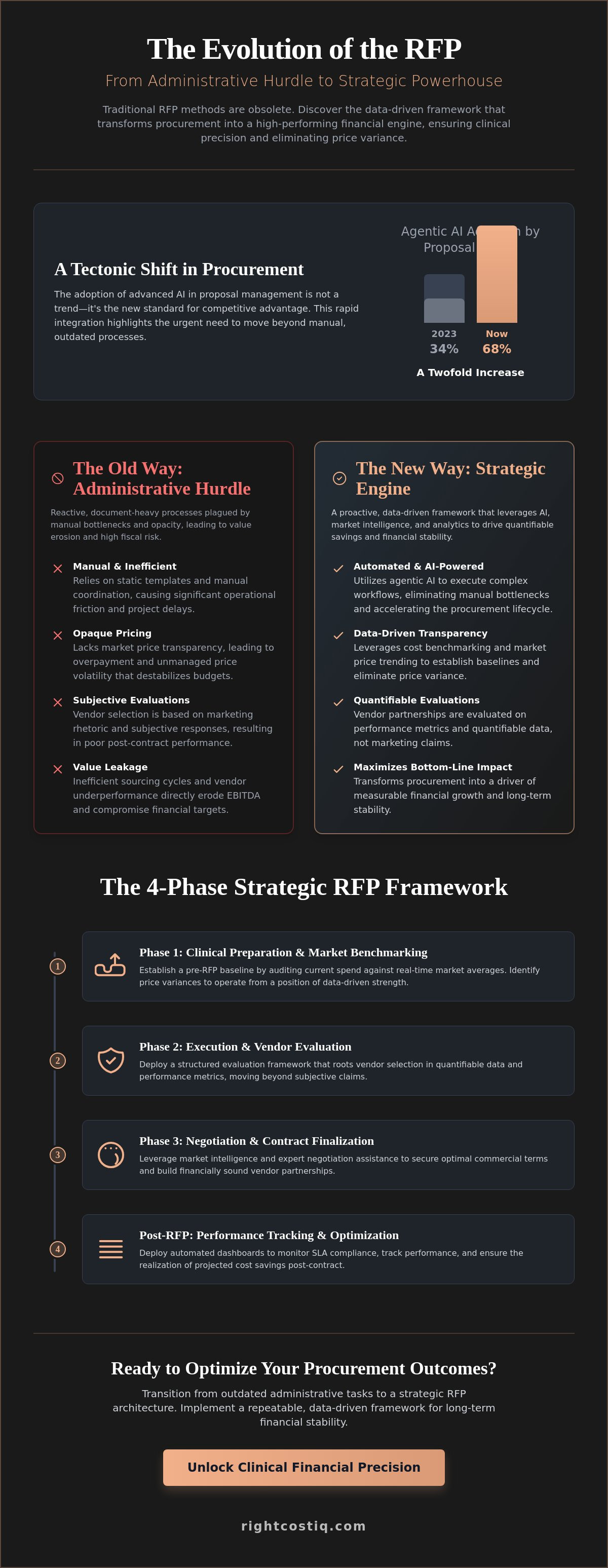
Phase 3: Negotiation Strategy and Contract Finalization
Negotiation is the stage where the data-driven intelligence gathered in previous phases is converted into tangible financial leverage. While generic procurement guides often conclude at the point of vendor selection, a complete understanding of how to manage the RFP process from start to finish requires mastering the final contractual alignment. You must leverage market price trending as a primary negotiation lever to secure terms that reflect current industry realities rather than vendor-preferred margins. This phase isn't about general compromise; it's about clinical precision in cost-value alignment. High-value procurement contracts frequently demand professional negotiation assistance to navigate complex pricing structures and ensure that the cost savings identified during bid analysis are fully realized in the final agreement.
Effective finalization bridges the gap between a vendor's proposal and their actual performance. By 2026, the shift toward fixed-price contracts in federal and corporate sectors has made the negotiation of price risk management clauses a critical survival skill. Procurement leads must ensure that the contract language accounts for market volatility, protecting the organization from inflationary spikes and supply chain disruptions. This level of strategic foresight prevents the "savings leak" that often occurs when a well-sourced contract is poorly executed. Every commercial term must be scrutinized through the lens of long-term financial stability and operational efficiency.
The Clinical Negotiation Framework
A clinical negotiation framework utilizes the procurement category cost benchmarking established during the preparation phase to systematically counter vendor pricing objections. When a vendor attempts to justify a premium by citing proprietary value, the procurement lead must counter with data-driven market intelligence that isolates the actual cost of delivery. This objective approach removes subjective emotion from the discussion and forces a focus on quantifiable total cost of ownership. Negotiation is the strategic alignment of cost and value to ensure long-term operational viability. By structuring scenarios that prioritize long-term vendor performance over short-term discounts, you create a partnership that is both resilient and financially optimized. This ensures that the vendor remains incentivized to deliver high-quality service while your organization maintains its margin expansion targets.
Final Selection and Contractual Compliance
The finalization of the RFP process involves codifying every specific promise made during the bid stage into a legally binding Statement of Work (SOW). Price risk management must be addressed directly within the contract language to mitigate future market volatility and prevent post-contract price creep. This includes integrating market price forecasting into long-term pricing adjustment clauses, which protects your organization from unexpected cost spikes. Service Level Agreements (SLAs) must be linked to quantifiable performance tracking metrics that are auditable and transparent. Establishing this framework from day one ensures that the vendor remains strictly accountable to the standards defined during the solicitation. To optimize these outcomes, many high-level decision-makers engage Request For Proposal (RFP) Management and Negotiation Assistance to ensure every contractual detail aligns with their strategic financial goals.
Post-RFP: Performance Tracking and Continuous Optimization
The execution of a contract is not the conclusion of the procurement lifecycle; it is the beginning of the performance realization phase. Transitioning from RFP management to active vendor performance tracking ensures that the clinical financial gains negotiated during the solicitation are actually delivered. Most procurement failures occur post-signature when organizations lack the infrastructure to monitor compliance against the original bid. A truly strategic approach to how to manage the RFP process from start to finish requires the implementation of automated dashboards to monitor Service Level Agreement (SLA) compliance in real-time. This visibility prevents the savings leakage that typically occurs when vendors deviate from their initial pricing models or performance promises. By maintaining this level of scrutiny, procurement architects protect corporate margins and ensure long-term operational stability.
Quarterly Business Reviews (QBRs) should serve as a clinical audit of the vendor's output, utilizing the exact weighted scoring matrix developed during the evaluation phase. This creates a consistent feedback loop where performance is measured against the original baseline. Using RFP data as a persistent benchmark allows for objective re-negotiations and provides the necessary leverage for future sourcing cycles. If a vendor fails to meet the quantifiable metrics defined in their proposal, the procurement team has the auditable data required to trigger remediation or initiate a replacement cycle. This relentless focus on accountability is what distinguishes a high-performing procurement department from a standard administrative unit.
Vendor Performance Tracking Systems
Modern procurement requires systems that measure actual vendor output against the clinical benchmarks established during the RFP. Identifying savings leakage is critical; this occurs whenever actual project costs exceed the negotiated rates due to unmanaged scope creep or hidden fees. Automating the tracking of supply chain compliance and risk allows for the immediate detection of performance outliers. These systems provide a data-driven foundation for vendor management, replacing subjective assessments with hard performance metrics. By integrating these tracking services, organizations ensure that every dollar spent aligns with the strategic objectives of the original solicitation.
The Perpetual RFP Cycle: Continuous Improvement
Success in procurement is iterative. Feedback gathered from each vendor lifecycle must be used to refine the next start to finish process, ensuring that requirements gathering and benchmarking become increasingly precise over time. Updating the internal cost benchmarking database with real-world contract data allows for more accurate forecasting in future sourcing initiatives. This continuous improvement model transforms the RFP from a one-time event into a perpetual engine for financial optimization. Discover how RightCostIQ's RFP management services optimize your procurement lifecycle. By treating every contract as a data source, organizations can stay ahead of market trends and maintain a permanent competitive advantage in vendor negotiations.
Mastering the Financial Lifecycle of Procurement
Mastering the end-to-end RFP lifecycle requires a definitive shift from administrative coordination to a clinical financial discipline. By integrating procurement category cost benchmarking and automated performance tracking, organizations can eliminate price variance and secure high-performing vendor partnerships. Understanding how to manage the RFP process from start to finish ensures that every contractual agreement serves as a primary driver for corporate financial growth rather than a source of savings leakage. This strategic framework provides the transparency needed to navigate volatile market conditions with absolute precision.
You can achieve these quantifiable outcomes by leveraging proprietary cost benchmarking analytics and global procurement risk management expertise. Implementing automated vendor performance tracking architectures ensures that negotiated value is realized throughout the entire contract term. Optimize Your Sourcing Strategy with RightCostIQ's RFP Management Expertise. This transition to a data-driven sourcing model will stabilize your bottom line and provide a permanent competitive advantage in the 2026 procurement landscape. Your organization is now equipped to lead with efficiency and strategic authority.
Frequently Asked Questions
What is the typical timeline for an enterprise RFP process?
An enterprise-level end-to-end cycle typically spans six to twelve weeks depending on category complexity. While the average response time for a single submission has decreased to 25 hours in 2026, the full strategic process includes clinical preparation, market benchmarking, and professional negotiation assistance. Rushing these phases often leads to poorly defined requirements and missed cost-saving opportunities. A structured timeline ensures all stakeholders remain aligned with the final financial objectives.
How do I ensure vendor compliance during the RFP cycle?
Ensuring compliance requires a centralized procurement platform that enforces auditable tracking for every vendor interaction. You should implement a weighted scoring matrix that automatically penalizes submissions with missing data or non-standardized pricing structures. This clinical approach filters out non-compliant bidders early in the evaluation phase. It's the only way to maintain the integrity of your data-driven sourcing framework and ensure comparable results.
Can I manage the RFP process without specialized procurement software?
Managing the process manually is possible but creates significant operational bottlenecks and increases the risk of price variance. 68% of proposal teams now utilize agentic AI to execute workflows, which reduces response times by 40% to 60%. Organizations that avoid automation struggle to maintain the clinical precision required for effective cost benchmarking. Technology is essential for anyone learning how to manage the RFP process from start to finish in a high-volume environment.
What are the most common mistakes in RFP management?
The most frequent error is neglecting the pre-RFP market benchmarking phase, which results in soliciting bids without a "Right Cost" baseline. Organizations also frequently fail to codify specific vendor promises into the final Statement of Work. This lack of contractual precision leads to post-signature savings leakage. Avoiding these mistakes requires a shift from administrative document coordination to a clinical, data-driven financial discipline.
How do I calculate the ROI of a professional RFP management service?
ROI is calculated by measuring the delta between historical category spend and the post-negotiated rates secured through professional assistance. You must also factor in the reduction in operational friction and the avoidance of price volatility through risk management clauses. These quantifiable savings directly impact EBITDA and corporate margin expansion. Professional management ensures that the projected financial gains are actually realized through automated performance tracking.
What is the difference between an RFP, an RFQ, and an RFI?
An RFI is a preliminary research tool used to gather broad market intelligence and identify potential vendors. An RFQ is a simplified document focused strictly on price for standardized commodities. In contrast, the RFP is a strategic instrument used to evaluate complex service solutions where technical competence and total cost of ownership are critical. The RFP process requires the most rigorous evaluation and negotiation framework to ensure long-term value.
How often should I re-run an RFP for existing service categories?
Most strategic organizations re-evaluate major service categories every twenty-four to thirty-six months. This cadence allows you to capture shifts in market price trending and ensure your incumbent vendors remain competitive. Categories experiencing rapid technological disruption or high price volatility may require more frequent solicitations. Regular cycles prevent vendor complacency and ensure your procurement strategy remains aligned with live market conditions.
How does market price trending impact the RFP process?
Market price trending serves as a powerful negotiation lever by providing real-time data on industry cost fluctuations. It allows procurement architects to identify whether vendor price increases are rooted in market reality or opportunistic margin expansion. Incorporating these trends into your evaluation ensures that your contract terms remain favorable throughout the entire partnership. This intelligence is a cornerstone of how to manage the RFP process from start to finish with clinical financial precision.


